CLP: A Real-World Dataset of Contaminated Lens Protectors for Robust Semantic Segmentation
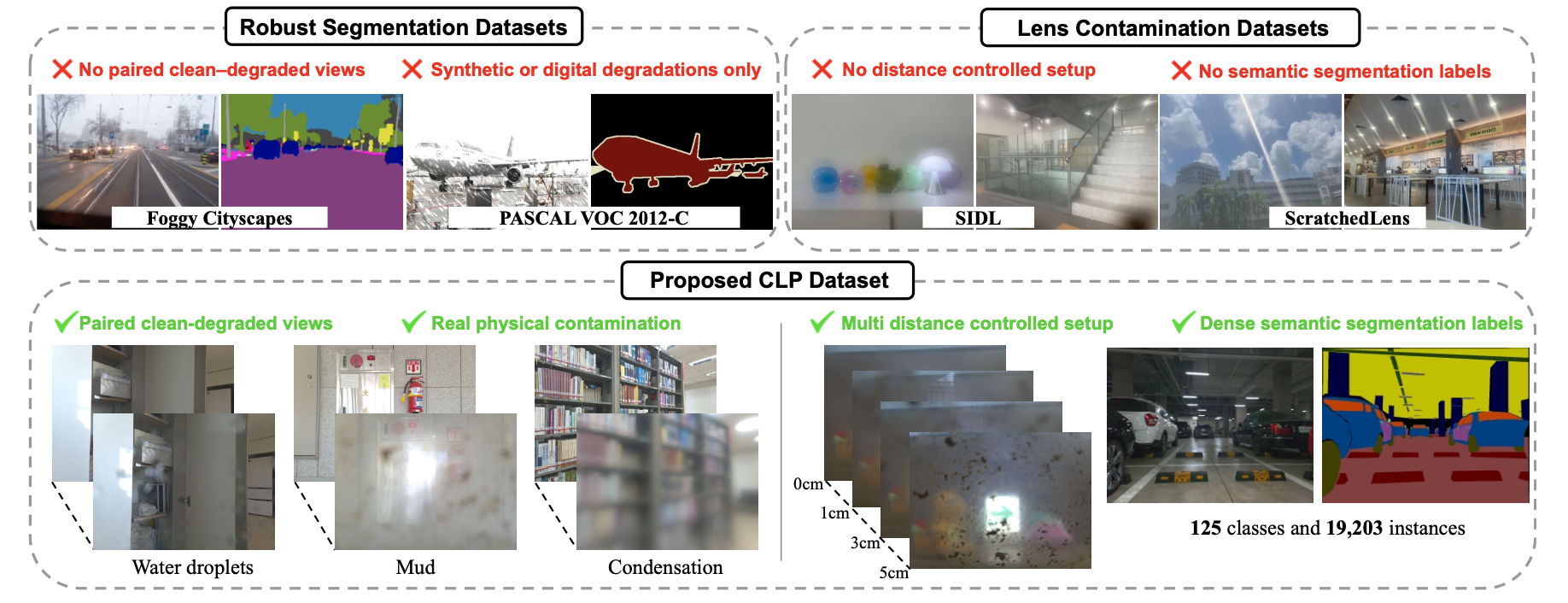
The CLP dataset captures real lens-protector contamination — mud, water droplets, and condensation — across four lens-to-protector distances, paired with dense semantic segmentation masks and aligned restoration targets.
Abstract
The reliability of autonomous systems in real-world environments depends heavily on the robustness of visual perception. However, physical contaminants that adhere to the camera lens or lens protector, such as mud, water droplets, and condensation, remain largely underexplored compared with common synthetic corruptions or weather degradations.
We introduce CLP (Contaminated Lens Protector), a real-world benchmark for evaluating semantic segmentation and image restoration under realistic lens-protector contamination. CLP contains 600 indoor/outdoor scenes captured at 0, 1, 3, and 5 cm lens-to-protector distances, yielding 4,800 degraded images paired with clean references.
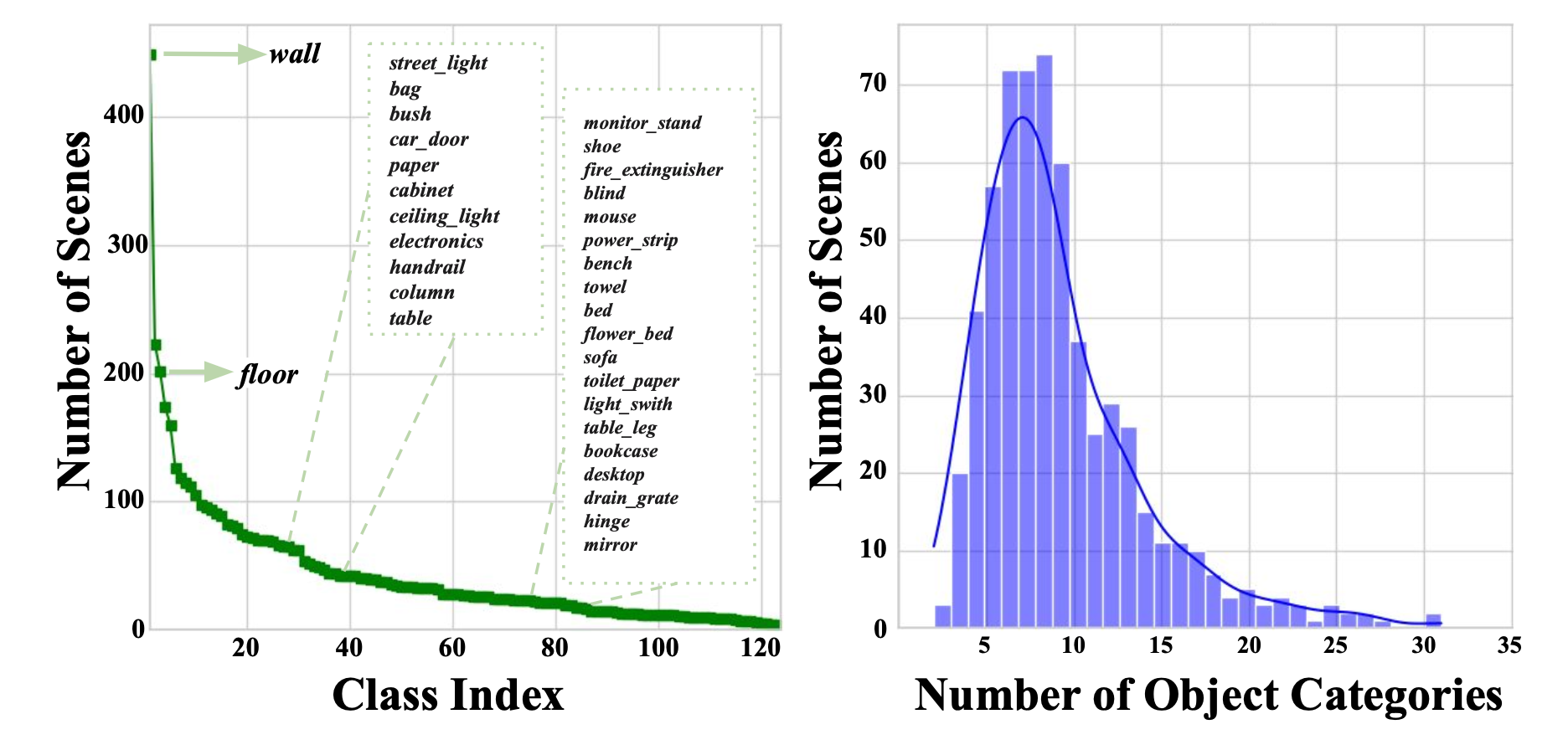
CLP also provides dense segmentation annotations with 125 object categories and 19,203 instances. Our benchmark reveals how modern segmentation and restoration models behave under real lens-protector contamination, highlighting the need for robust perception in safety-critical vision.
CLP Dataset
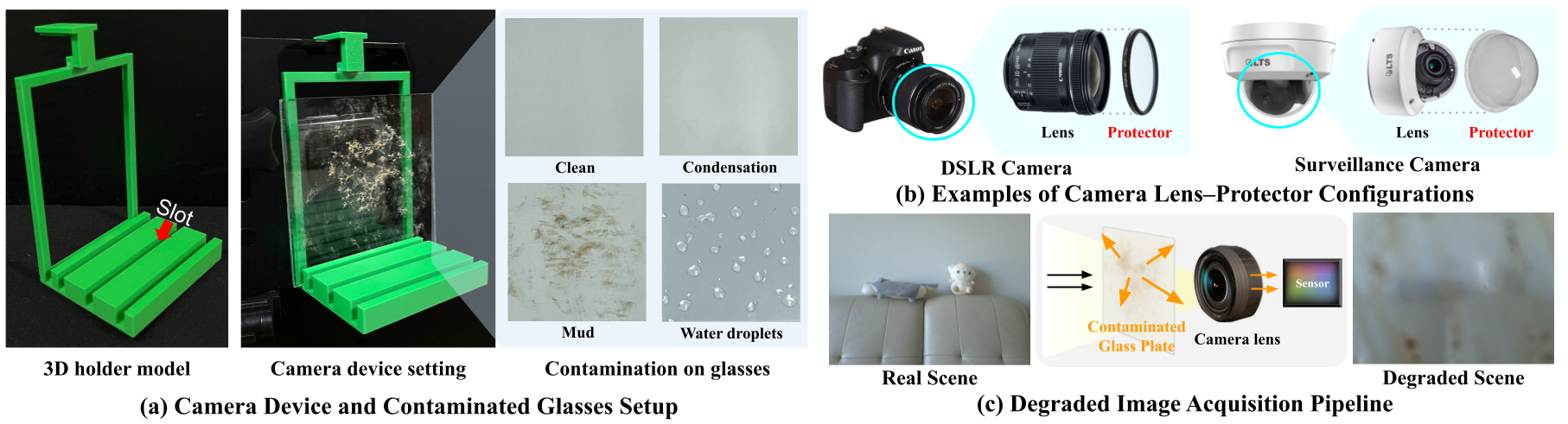
CLP captures real lens-protector contamination with a custom 3D-printed smartphone holder that fixes glass plates at 0, 1, 3, and 5 cm in front of the camera lens. This controlled setup enables paired captures of clean references and contaminated images under realistic lens-protector degradations.
Collection Setup
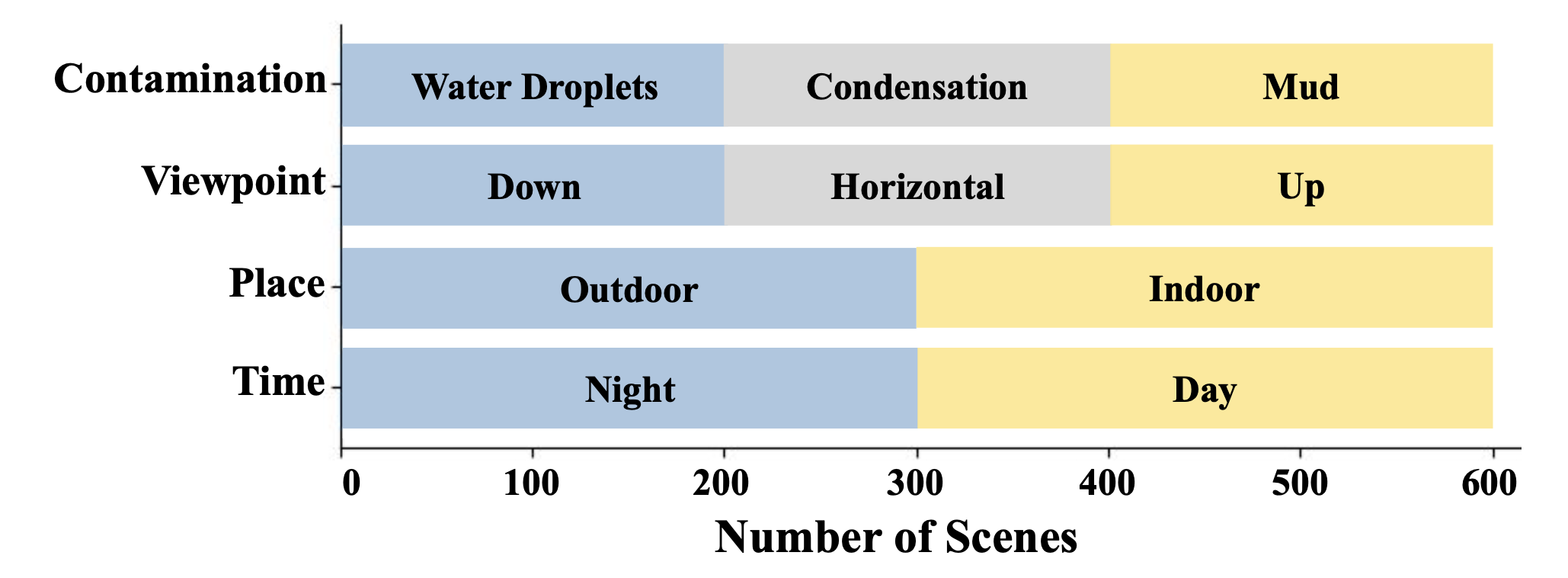
Statistics
600 scenes were captured across diverse indoor/outdoor environments, day/night conditions, and three camera angles (up, horizontal, down). The dataset contains 4,800 degraded images (600 scenes × 2 refs × 4 distances), 125 semantic classes with 19,203 annotated instances, and a 480 / 120 scene train/test split.
Analysis
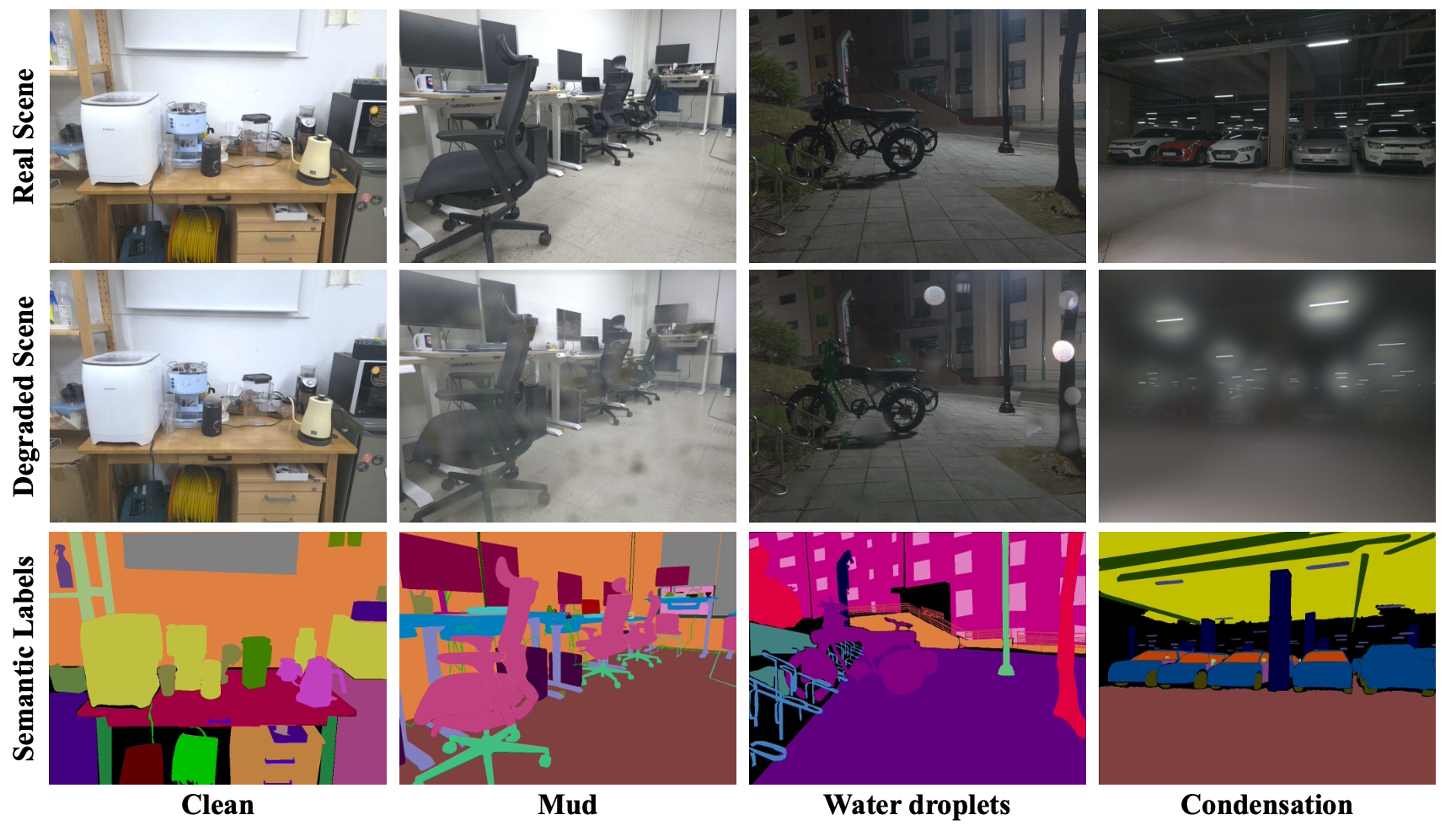
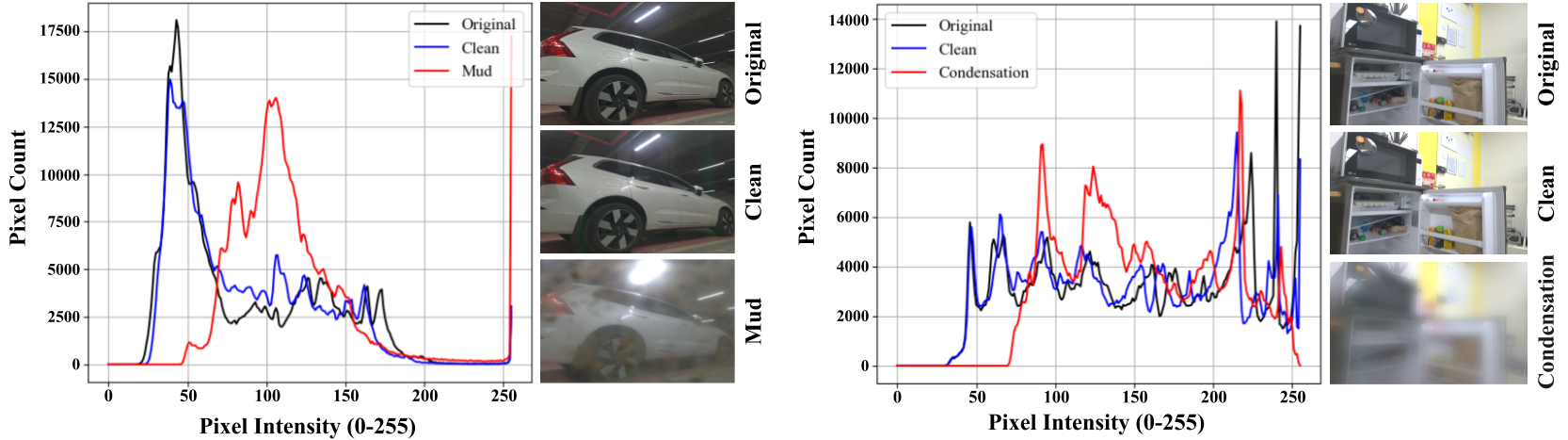
The histogram analysis shows that clean protector images remain close to the original images, while mud, water droplets, and condensation introduce distinct physical degradations.
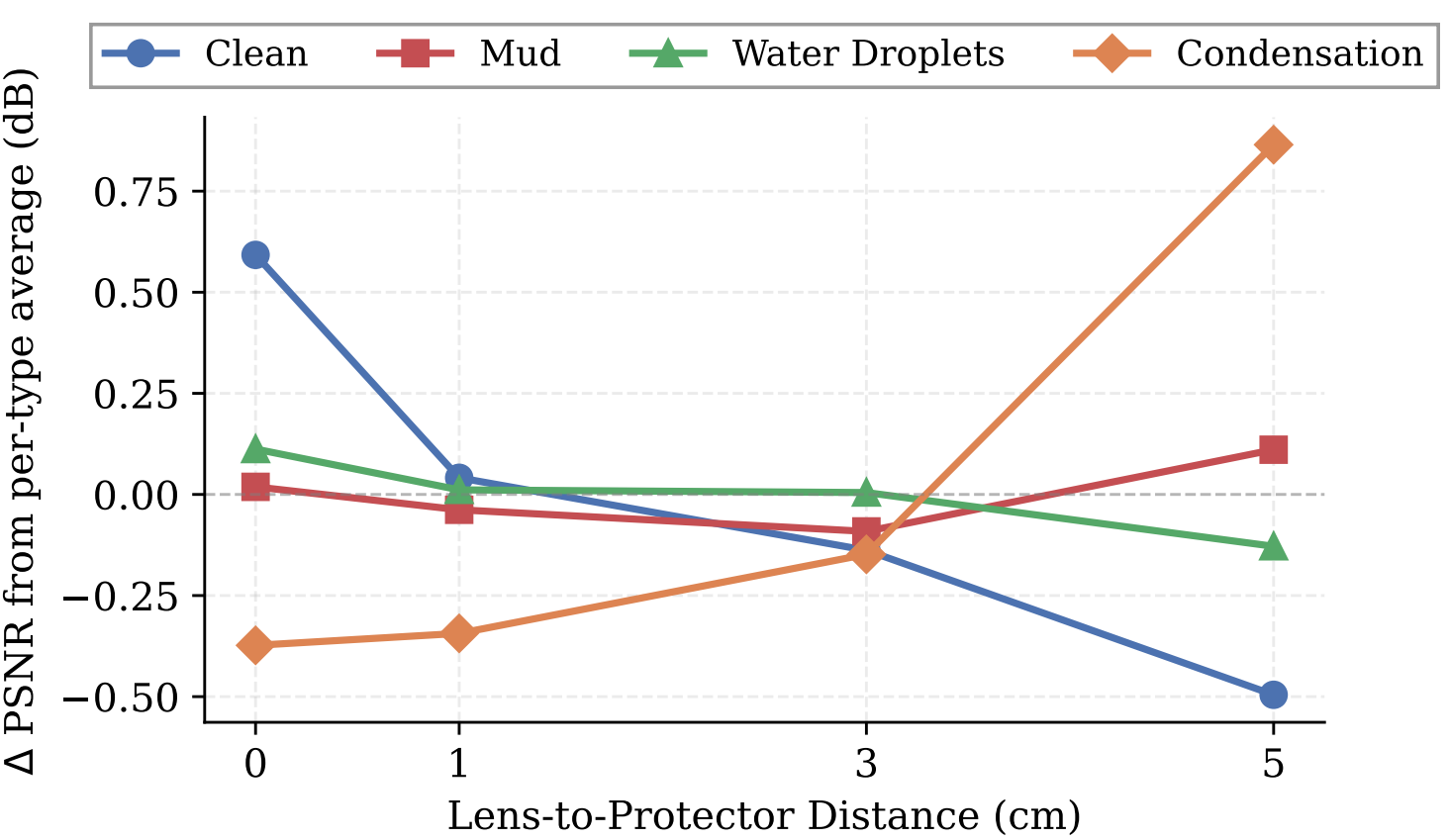
The distance analysis further shows that contamination behavior changes with lens-to-protector distance: clean distortion increases with distance, condensation becomes more defocused, and localized occlusions such as mud and water droplets shift spatially while retaining severe artifacts.
Experiments
Segmentation Results
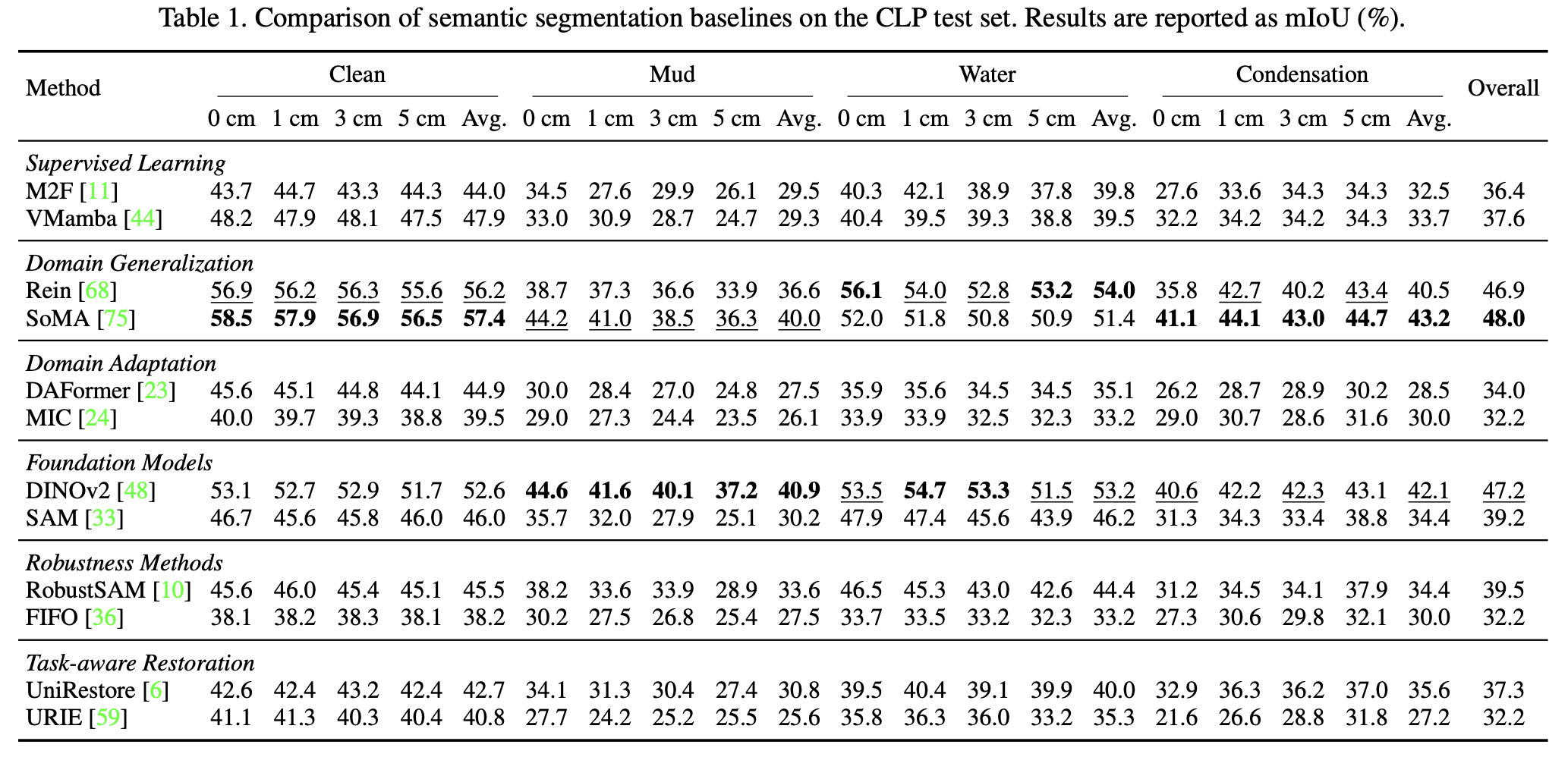
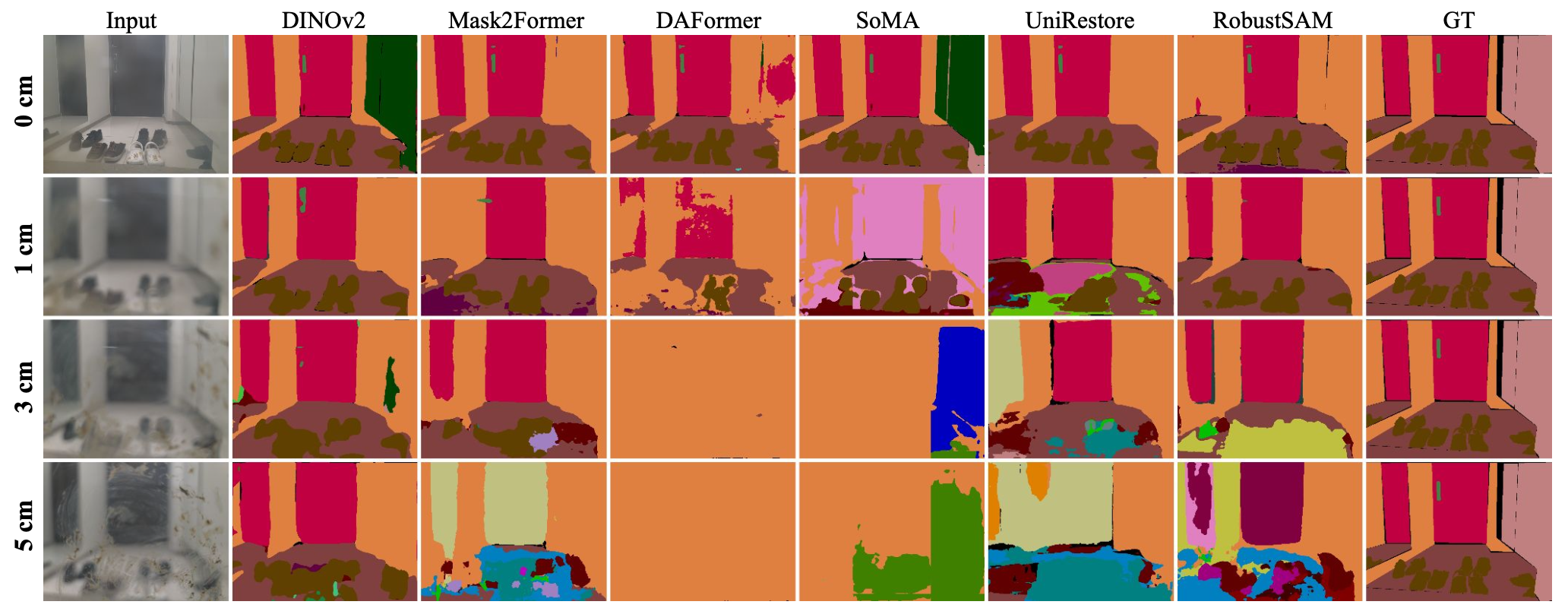
Severe mud contamination causes the largest segmentation degradation, especially as the lens-to-protector distance increases. A key finding is that Domain Generalization methods consistently outperform Domain Adaptation methods, even though DG models are trained only on clean images while DA models use unlabeled contaminated data. DINOv2 achieves the strongest overall robustness, likely due to large-scale foundation pretraining, and preserves coarse semantic structures under severe distortion.
Restoration Results
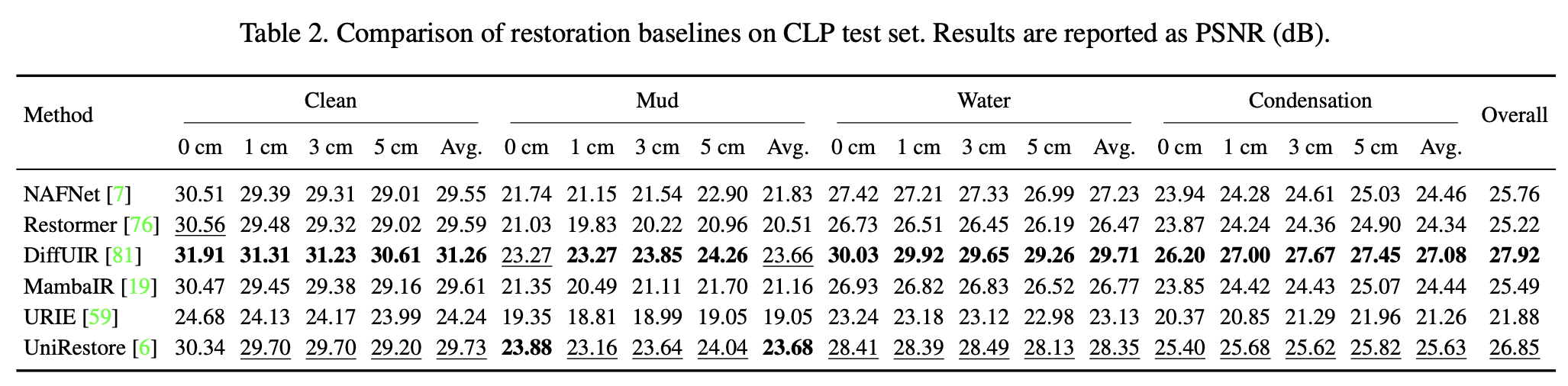
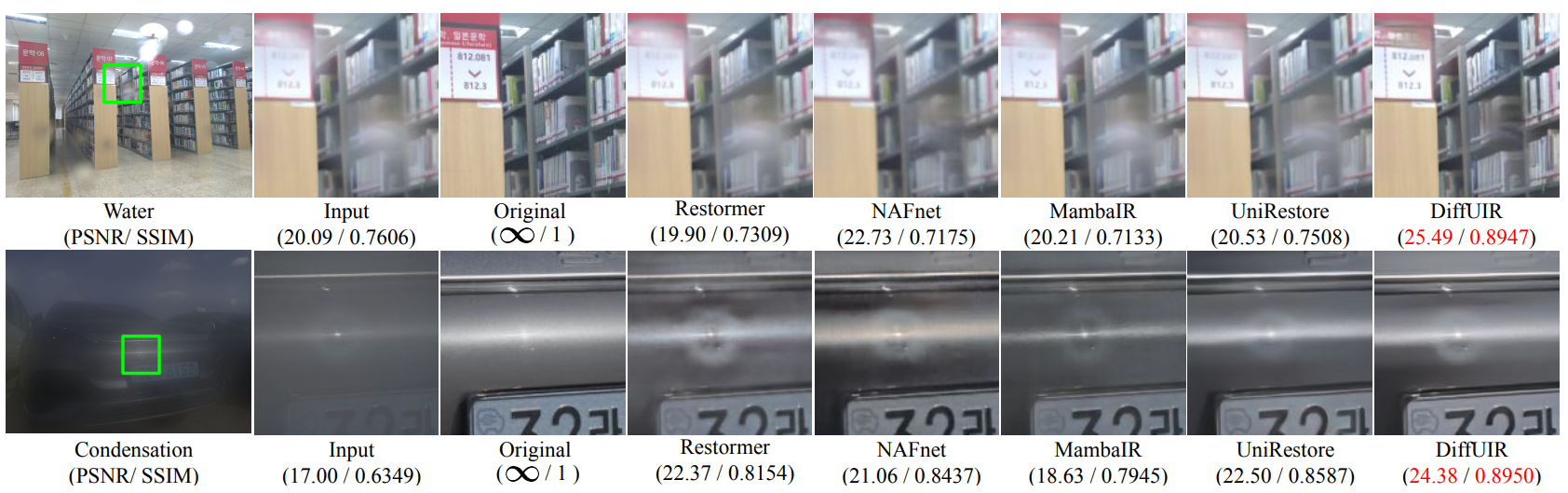
DiffUIR and UniRestore achieve the strongest overall restoration performance, showing that generative restoration priors are effective for the complex degradation patterns in CLP. However, visible artifacts remain in severely degraded regions, indicating that restoration under real lens-protector contamination remains challenging.
Conclusion
CLP provides a real-world benchmark for robust perception under realistic lens-protector contamination, offering paired clean and contaminated images, dense semantic labels, aligned restoration targets, and multi-distance captures. Our experiments establish segmentation and restoration baselines and reveal how real physical contamination affects modern perception models.
By combining controlled real-world captures with dense annotations and paired restoration targets, CLP supports systematic evaluation of both robustness and recovery. We hope CLP will serve as a useful foundation for developing perception models that remain reliable under realistic camera contamination.
License
This dataset is released for research and educational purposes only. Commercial use, redistribution, or derivative dataset release requires prior written permission from the authors.
BibTeX
@InProceedings{Park_2026_CVPR,
    author    = {Park, Sungyong and Choi, Sooyoung and Koh, Hyunsuh and Choi, Youngjae and Kim, Heewon},
    title     = {CLP: A Real-World Dataset of Contaminated Lens Protectors for Robust Semantic Segmentation},
    booktitle = {Proceedings of the IEEE/CVF Conference on Computer Vision and Pattern Recognition (CVPR)},
    month     = {June},
    year      = {2026},
    pages     = {3794-3804}
}